
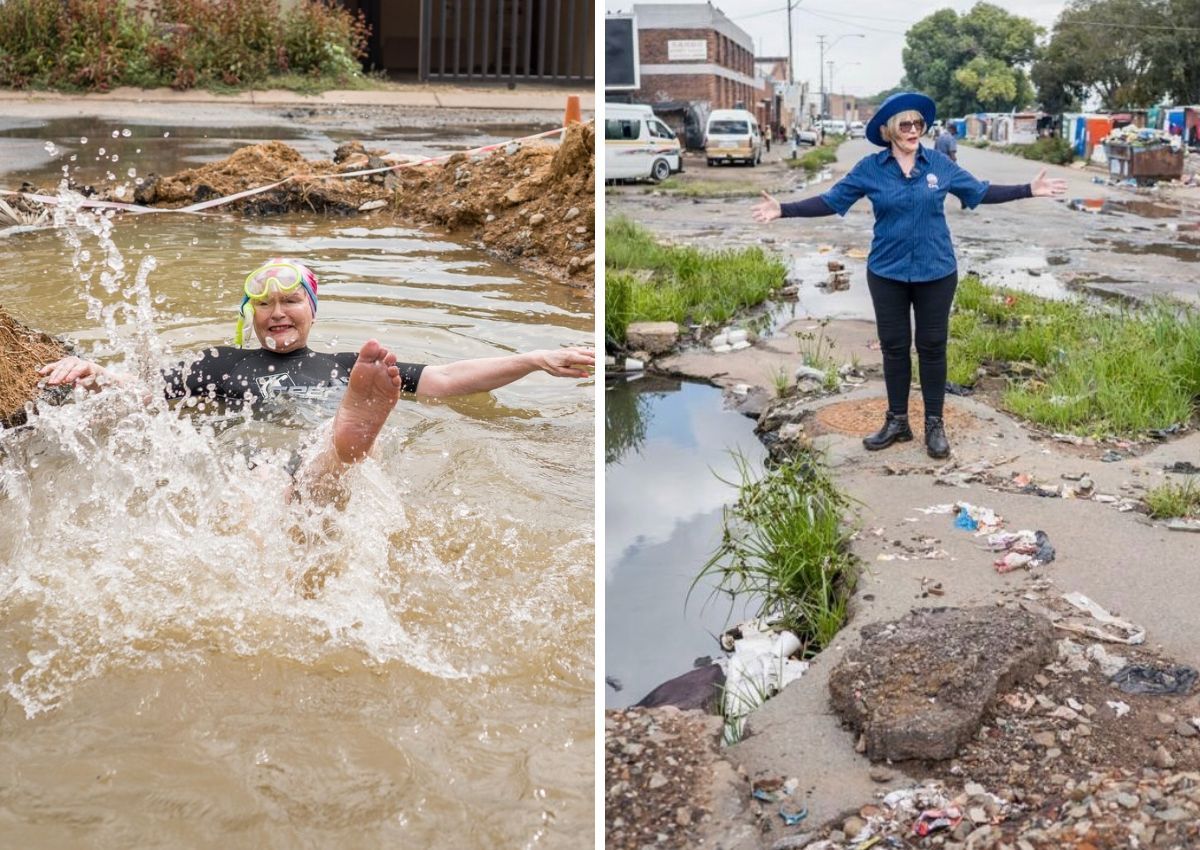
While reputable freight organisations are investing in better vehicles, more sophisticated air-ride suspensions, and better loading practices, there is very little that can be done about the collapsing road infrastructure that is endemic to all provinces in South Africa.
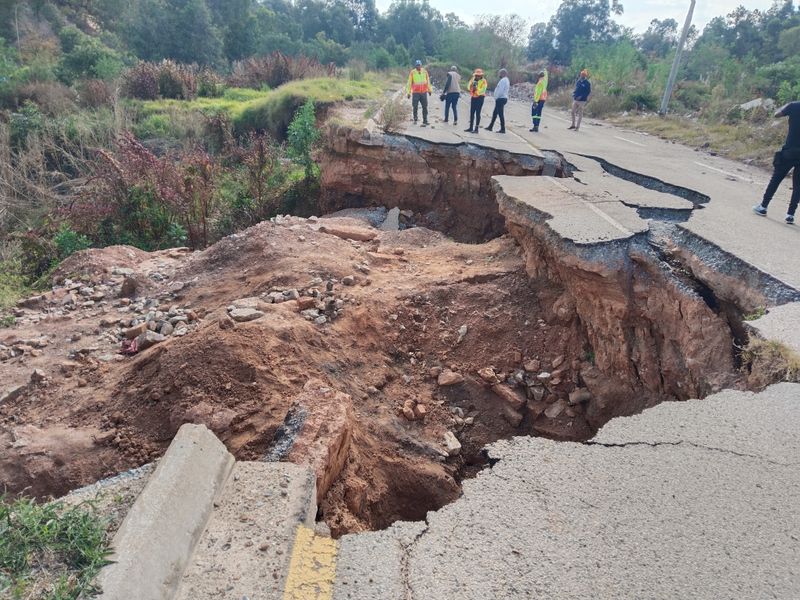
The multifarious potholes result in high-impact shocks every time they are ridden over and cause freight to be subjected to intense dynamic load factors that can subject freight to forces several times greater than the force of gravity. (Dynamic load factors refer to the stresses freight experiences in a vehicle. These factors can include vertical and horizontal pressure.) The extensive reports of greater infrastructure damage, such as sinkholes and ground instability, are also indicators of collapsing road infrastructure. This damage is particularly prevalent in areas where there has been illegal mining activity. These activities eroded the ground beneath public infrastructure, including some of the main highways.
Illegal mining (“Zama Zama” operations) has expanded dramatically in recent years. Abandoned mines (such as Crown Mines and Durban Deep in Johannesburg) are frequently re-entered illegally, with tunnels excavated without engineering oversight or regard for public safety. With very little sophisticated equipment, these illegal miners will enter old, existing abandoned shafts and descend thousands of meters using old rope and ladders or makeshift, primitive winches.
They use pickaxes, hammers, crowbars, chisels, shovels, and sometimes small jackhammers or battery-powered drills, and the extracted ore is then raised to the surface in 50kg bags. These activities weaken the ground supporting roads, bridges, and other infrastructure. This has created greater diversion of traffic away from these high-risk areas, but this too has a knock-on effect for the freight industry. For freight operators, every diversion means longer transit times, increased fuel consumption and greater exposure to accident risk.
Illegal Mining Creates Risks Beyond the Mine
Illegal mining is often viewed purely as a law-enforcement issue, but in reality it is an issue that affects all of society in South Africa, and a failure to curtail this will result in the structural collapse of bridges and highways and even potentially the loss of life. As underground workings expand unchecked, they threaten nearby roads, rail infrastructure, utilities, and industrial areas.
Every collapse places freight vehicles, their drivers, and the communities using those roads at risk. These are not isolated cases where collapsing road surfaces are confined to visible potholes and broken-up tar surfaces.
In parts of Gauteng, the ground beneath important transport routes is itself being compromised.
Rondebult Road in Boksburg was closed in February 2023 after the roadway began caving in, and a second large sinkhole subsequently developed on the same arterial route. Although illegal mining was widely suspected by residents and community representatives, the City of Ekurhuleni denied this and stated that the sinkhole was caused by the collapse of the dolomite substrates over time.
Engineers have pointed out that the sinkhole collapse is atypical of that associated by dolomite and more likely to be one related to the illegal mining activities conducted in the area. Whether this is true or not remains a moot point, but placing a few metal painted drums across the damaged road surface is not an effective engineering solution.
*An article appearing in the Boksburg Advertiser on 18 July 2024 highlights the severity of the issue.
The Rondebult Road collapse has reportedly developed into a sinkhole approximately 20 metres deep. Its exact width has not been officially published. The affected area is extensive enough to have closed a major arterial road. The road carried an estimated 37,000–45,000 vehicles a day.
The Johannesburg Roads Agency was established in 2001 to maintain and manage Johannesburg’s road and stormwater infrastructure.
In its report of 2025, it has stated that “Underground excavation has contributed to collapsing roads and deep cavities in areas including Wemmer Pan, Booysens, Turffontein, Selby, Roodepoort and Witpoortjie. In some affected areas, underground voids have reportedly reached depths of up to 22 metres.”
What is of even greater cause for alarm is the fact that the threat has now extended to infrastructure beneath sections of Johannesburg’s M1 and M2 motorways.
The JRA commissioned specialist engineering consultants to do surveys and estimations of the extent of the damage caused by this illegal mining activity. The investigations have revealed huge cavities formed underground, caused primarily by the illegal tunnels, eroded embankments, damaged bridge abutments and the removal of material from around supporting structures. Engineers have indicated that the bridges remain structurally safe at present, but authorities have warned that continued excavation could ultimately result in infrastructure failure.
A bridge abutment is the massive concrete structure at each end of a bridge that supports the bridge and holds back the surrounding earth, they transfer the weight of the bridge and traffic to the surrounding areas of ground. When illegal miners remove sand, soil or rock around these foundations, the load-bearing capacity of the ground is reduced, and ground that appears stable today can collapse with little warning once the remaining material can no longer support the load.
These problems threaten not only motorists but also utilities and transport links serving Johannesburg’s economic hub.
Conclusion:
One of the greatest dangers facing South African motorists and the road freight industry in particular is not the sinkholes visible to the naked eye, but the underground caverns that continue to grow beneath the surface.
While engineers have confirmed that the M1 and M2 bridges remain safe for now, they have also warned that continued excavation could ultimately lead to infrastructure failure. In other words, the risk is not today’s bridge. It is tomorrow’s collapse if the illegal mining continues unchecked.
For the freight industry, these are not merely municipal maintenance problems. Every road closure, diversion, unstable surface and sudden obstruction increases the risk of accidents, emergency braking, shifted loads, vehicle damage and damaged consignments.
The late John Berks once famously said on the radio, “South Africa is the only place where you can come home and discover they have stolen your swimming pool”
Now it would appear even the ground beneath your swimming pool is at risk of being eroded.