
Written By Steve Zeff, Dated Tuesday, 7th April 2026.
The escalation of the war between the US and its allies and Iran and its proxies will have a dramatic effect on consumer prices in South Africa.
As I write this from my bomb shelter in Israel, the news has just reached us of an attack on Kharg Island as the US attempts to pressure Iran into opening the straits of Hormuz.
Why do I say this? South Africa is a major importer of crude and refined fuel and is therefore directly impacted by rising global oil prices.
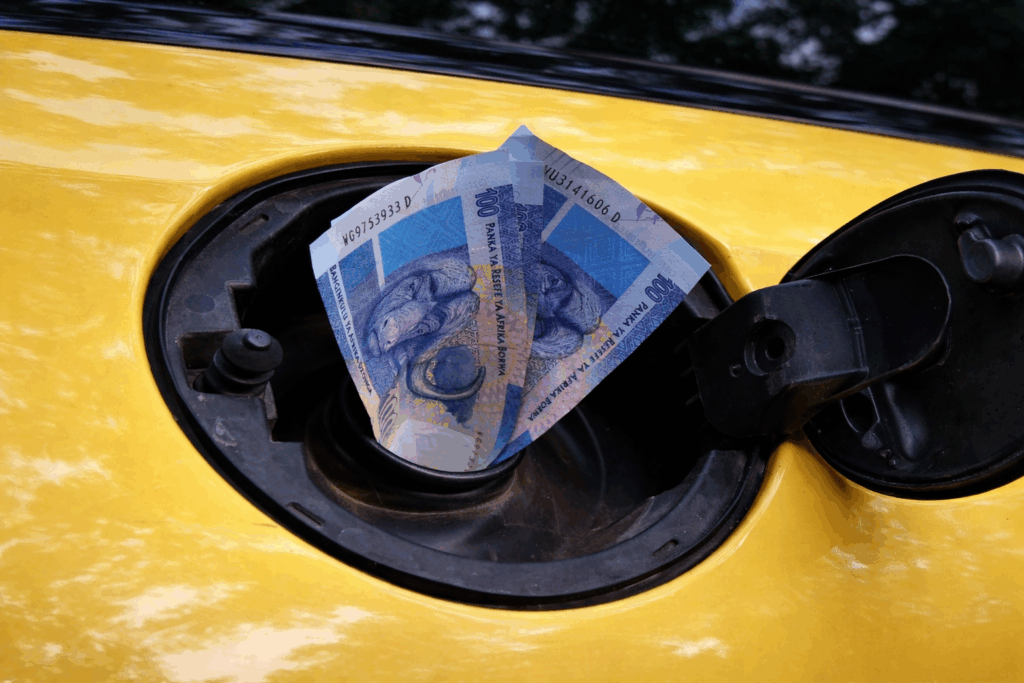
As of 1 April, petrol prices have increased by R3.06 per litre, and diesel by over R7.00 per litre. Currently, you can expect to pay between R25.00 and R27.00 per litre of diesel at the pump. These increases happened despite a temporary R3.00 per litre fuel levy cut to soften the blow, which cost the SA government R6 billion in revenue for the month of May.
As the war continues and global oil prices rise, South African consumers will feel the knock-on effect. It is not only because Iran’s oil assets will be destroyed. Iran only exports about 2 million barrels of oil per day, and there are other suppliers of oil.
This reduced supply would only add about $15.00 per barrel.
The real threat comes from the closing of the Strait of Hormuz. 20% of the worlds oil is transported through these straits. The cost of this closure would push the oil price up by about $80.00 per barrel.
For South Africa, with the weakened rand hovering around R17 to the dollar, every spike in global oil prices is amplified locally — making South Africa one of the hardest-hit freight markets in the world. South Africa often experiences more extreme fuel price swings than developed markets, as the expected monthly adjustments will mean sharp, sudden increases rather than gradual changes.
In an already price-sensitive market, freight operators will be left with 3 choices.
- Try to absorb the costs internally, which is unrealistic given that the road freight industry operates on low profit margins of between 1 and 3%.
- Increase fuel surcharges immediately and be prepared to do this again.
- Pass the direct cost onto consumers by adjusting tariffs and rate increases.
The truth is fuel is paid for upfront, and customers only pay 60 to 90 days later, so theoretically, freight operators could also offer early settlement discounts, but this will only assist with cash flow and not profit margins.
Fuel increases not only affect line haul and distribution costs, but they also affect warehousing and manufacturing costs.
In warehouses, fuel doesn’t only affect trucks and forklifts – many freight operators are dependent on generators due to the unstable electricity supply- and these all run on diesel.
Manufacturers are affected by both inbound and outbound transport costs.
Every manufacturer depends on the supply of raw materials; an increase in fuel will automatically mean an increase in inbound transport costs for these materials.
Once the goods are produced, an increase in fuel means increases in costs for delivery to DC’s, retailers and consumers.
Look at a staple locally produced item like a loaf of bread. The wheat has to be transported, baking is energy-intensive, then there is packaging and distribution to retailers, and ultimately to consumers.
Wheat costs distributed by road will be affected by as much as 10% due to the higher diesel cost. Bakeries rely on a stable electricity supply, and often this is provided by diesel generators. A fuel spike will lead to a 5-8% increase in production cost, which in turn will mean a higher price per loaf. Bread is generally packed in plastic, which is derived from petroleum derivatives like polyethylene. This cost could increase by as much as 3-5%. The distribution cost may increase by as much as 10-20% due to the sharp diesel price increases.
So currently, where a loaf of bread costs on average R18.00, very quickly this will escalate to R23.00 (an overall increase of more than 25%.)
Freight operators will have to adopt keen operational strategies to try to reduce costs further. We can expect to see larger loads as operators consolidate freight over fewer trips. These attempts to maximise payloads per trip — consolidating shipments, delaying departures to achieve fuller loads, and pushing vehicles closer to their capacity limits- may improve cost efficiency per kilometre, but it introduces new operational risks, including overloading, poor load distribution, and increased pressure on packaging integrity.
This means an increase in claims for goods damaged by poor packaging and potentially an increase in vehicle accidents due to overloaded freight trucks.
The war in Iran is not just an oil story — it is a freight story. Every rand increase at the pump multiplies across the supply chain, placing pressure on transporters, increasing risk, and ultimately raising the cost of doing business in South Africa.