
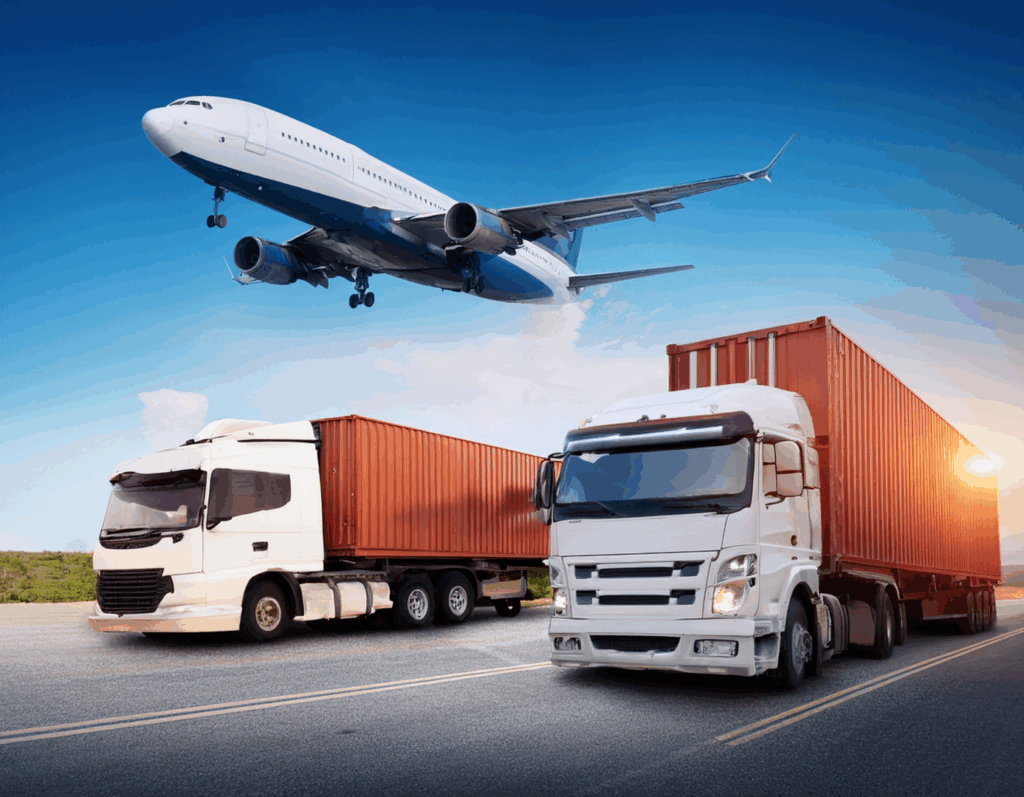
The South African courier industry is undergoing a significant transformation. As global disruptions and local infrastructure challenges collide, more customers of logistics companies are shifting away from expensive air freight in favour of road transport. But what’s behind this strategic pivot — and why is road freight, despite its own challenges, becoming the preferred option?
Let’s unpack the key reasons behind this growing trend.
Air Freight: Fast, but Financially Unsustainable
Air freight has always been the fastest way to move goods, but it’s also the most expensive. In the current economic climate, that cost premium is proving difficult to justify:
- Fuel efficiency disparity: Air freight consumes up to 40 times more fuel per tonne-kilometre than road transport. With global oil prices volatile and local fuel costs rising, this hits the bottom line hard. Particularly given the unstable Middle East situation.
- Post-pandemic crunch: Passenger flights (which carry belly cargo) haven’t fully recovered, restricting air cargo capacity and keeping prices high.
- Price inflation: As ocean shipping became unreliable, global demand for air freight surged, sending air cargo rates up more than 20% year-on-year in 2024 and 2025.
Air is now largely reserved for high-value or time-critical goods like medical supplies, tech components, and perishables. For everything else, companies are increasingly turning to road.
The Red Sea Crisis: A Global Shock With Local Implications
Late 2023 saw the outbreak of conflict in the Red Sea, with Houthi rebels attacking commercial vessels. This forced most global shipping lines to reroute around the Cape of Good Hope, dramatically increasing transit times and costs:
- Transit delays: Rerouted journeys took 10–15 days longer, increasing lead times across Europe, Asia, and Africa.
- Higher costs: Operating around Africa added more fuel consumption, higher insurance premiums, and congestion at African ports — including Durban.
But instead of switching to expensive air freight to absorb delays, many South African logistics providers turned to a more accessible solution: road freight.
Why? Because sea freight was delayed, air was still too costly — while road offered a flexible, mid-tier alternative for regional cargo movement and inland distribution.
Durban Port Congestion: Driving Inland Demand
Durban, South Africa’s largest port, has faced chronic underperformance — and the recent global turmoil made things worse:
- Low efficiency: In 2023, Durban ranked 399th out of 405 ports globally for performance.
- Congestion overload: Backlogs from redirected ships (due to Red Sea rerouting) overwhelmed terminal operations, causing container bottlenecks.
In response, customers of courier companies increasingly relied on road transport from Durban to inland hubs like Johannesburg, Pretoria, and Bloemfontein:
- Road offered speed and reliability versus port-linked rail.
- Companies used trucking corridors to bypass port and air terminal delays altogether.
E-Commerce and Domestic Demand Favour Road Freight
South Africa’s e-commerce sector continues to grow rapidly, with more consumers expecting quick, affordable delivery — especially in urban and peri-urban areas. In this space, road freight has clear advantages:
- Last-mile access: Only road can offer door-to-door delivery.
- Flexible fleet deployment: Courier companies can quickly scale vans and trucks to match demand.
- Smarter logistics: Many fleets now use GPS tracking, AI-based routing, and fuel optimization tools to reduce costs.
For domestic couriers, air freight makes little sense unless dealing with urgent overnight deliveries between major cities. Road is more scalable, especially for same-day or next-day regional fulfilment.
Road Freight: Not Without Challenges — But Still Winning
Of course, road freight isn’t immune to pressure:
- Fuel price volatility and tolls impact operating costs.
- Security risks like cargo theft and hijackings (averaging 20–25 per day in SA) raise insurance and technology costs.
- Driver shortages and vehicle maintenance require strategic investment.
But even with these issues, road freight remains more predictable and cost-effective than air, especially in the context of:
- Rising global shipping and air freight rates
- Delays and congestion at ports
- The growing demand for regional and e-commerce logistics
Road vs. Air Freight: A Quick Comparison
| Feature | Air Freight | Road Freight |
| Speed | Fastest (1–3 days) | Moderate (1–5 days regional) |
| Cost per tonne-km | 10–40 x higher than road | Lower, though rising with fuel |
| Reach | Limited to airports and major cities | Nationwide, including rural delivery |
| Scalability | Aircraft limited by capacity | Fleets can scale to meet demand |
| Suitability | Urgent, perishable, high-value goods | Bulk, routine, regional and domestic cargo |
Conclusion: Road Freight is the Real Winner (for Now)
Faced with global shipping disruptions, costly air freight, and domestic infrastructure challenges, South African logistics companies are making a smart pivot. Road freight — with all its flaws — offers a more flexible, affordable, and scalable solution for most courier and cargo needs.
As the sector modernizes with better technology, security, and route optimization, road freight is likely to remain the dominant force in South Africa’s logistics landscape — at least until port and rail capacity improve, and global shipping stabilizes.
Road freight isn’t just the fallback. In today’s environment, it’s the foundation.